
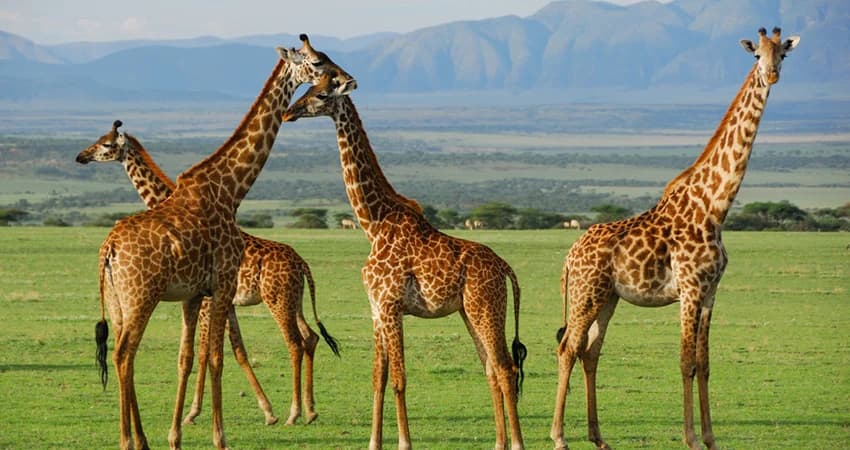
Identification and taxonomy
- IUCN's 2025 specialist review recognizes northern Giraffa camelopardalis, reticulated G. reticulata, Masai G. tippelskirchi and southern G. giraffa as four species. Source ↗
- Both male and female giraffes have skin-covered bony structures called ossicones, which differ from antelope horns. Source ↗
- Persistent, individual coat patterns allow researchers to recognize giraffes from photographs. Source ↗
- Reticulated giraffes have sharply bounded patches separated by pale lines; Masai giraffe patches have more irregular, leaf-like edges. Source ↗
Diet, social life and activity
- Giraffes primarily browse leaves and shoots from trees and shrubs; preferred plants vary with season and location. Source ↗
- Giraffe groups change membership, yet studies also reveal preferred associations; describing every gathering as random misses that social complexity. Source ↗
- Giraffes can feed and move by day and night, often spending hot hours resting or chewing cud. Source ↗
More field context
- GCF's current page says new Red List assessments are under way and separates its legacy single-species/subspecies table from expected categories under the four-species framework. Source ↗
- Samburu County specifically identifies reticulated giraffe among Samburu National Reserve's northern dryland fauna. Source ↗
- A long, flexible tongue and protected mouth help giraffes select foliage among thorns. Source ↗
- Male giraffes may contest dominance by swinging their heads and necks against one another, a behavior called necking. Source ↗
Photographing and watching responsibly
Use a wider frame to include the animal’s height and feeding context. Avoid forcing a close view or driving between animals. Keep photo captions broad when the species has not been reliably identified.
Choose a route that gives you time in suitable habitat and keep the day worthwhile even without a sighting. Activity patterns describe tendencies, not an appointment. Stay within the area and hours permitted by the park, follow the guide and never feed, call or provoke an animal for a response.
Photography and wildlife etiquette →Can I apply one conservation label to all giraffes?
No. Taxonomy and assessments need to be read together. This page deliberately avoids a single umbrella category and explains what the reviewed sources establish.
Are sightings guaranteed?
No. A park listing or conservation record establishes context, not the location of an animal during your visit. Weather, habitat, animal movement and access affect what can be observed. We do not promise a sighting, hunt, birth or other behaviour.
What to keep in mind
- Do not label all giraffes Vulnerable using the old single-species assessment.
- Do not publish GCF's expected categories as finalized new IUCN assessments without opening the applicable species assessment.
- Verify the taxon of each photo and local population before attaching a species-level label.
Sources reviewed . Conservation assessments retain their original dates; a review date does not mean the species was reassessed that day. Next editorial review due: May 2027, sooner if a cited assessment changes.
Where to look on our safari routes
These parks and landscapes have documented records of this animal. Use the links to compare habitats, overnight locations and routes. Local conditions and animal movement still determine what you see.
Maasai Mara
The Triangle checklist records elephant, buffalo, black rhino, common hippo, white-bearded wildebeest, common zebra and Masai giraffe.
Use the reserve checklist to understand the range of wildlife, rather than as a promise of sightings. Some names in older checklists differ from current species classifications.
Official or conservation source ↗Amboseli
Kenya’s submission lists bush elephant, Cape buffalo, Maasai giraffe, Grant’s zebra, wildebeest, lion, leopard, cheetah and spotted hyena.
This wildlife list comes from Kenya’s 2023 UNESCO Tentative List submission. Seasonal water, vegetation and animal movement affect what you will see; the listing does not predict sightings.
Official or conservation source ↗Samburu
The reserve section names elephant, reticulated giraffe, lion, leopard and cheetah.
Samburu also has Grevy’s zebra, a different species from the plains zebra described in this guide. Ask your guide to explain the identification differences.
Official or conservation source ↗Lake Manyara
TANAPA names elephant, lion, buffalo, zebra, wildebeest, giraffe and hippo in Manyara’s habitats.
Tree climbing is a known lion behaviour here, but it is not a promised sighting. A rewarding visit can also focus on the park’s varied habitats and other wildlife.
Official or conservation source ↗
Journeys through relevant habitat
These routes visit destinations supported by the presence sources above. They are general safaris, not guaranteed species encounters.