
Identification and taxonomy
Diet, social life and activity
- Savanna elephants browse trees and shrubs and eat seasonally available grass; woody material generally contributes more during dry periods. Source ↗
- Savanna elephants are active by day and night, often resting during peak heat; human disturbance can alter their activity. Source ↗
- Elephants communicate through calls, touch, scent and body movements; some calls are below human hearing. Source ↗
- Female relatives and calves form family groups led by a matriarch; mature males may travel alone or associate with other males. Source ↗
Conservation and evidence
- IUCN lists the savanna elephant as Endangered and the forest elephant as Critically Endangered; the labels are not interchangeable. Source ↗
More field context
- Savanna elephants use open habitats including grassland and desert; ivory poaching and habitat conversion are principal pressures identified by IUCN. Source ↗
- The trunk gathers vegetation and draws up water, which is then released into the mouth; it is not a drinking straw. Source ↗
- Water and forage influence movements within the constraints created by settlements, land use and protected-area boundaries. Source ↗
- Dusting and mud bathing help protect elephant skin and regulate exposure to sun. Source ↗
Photographing and watching responsibly
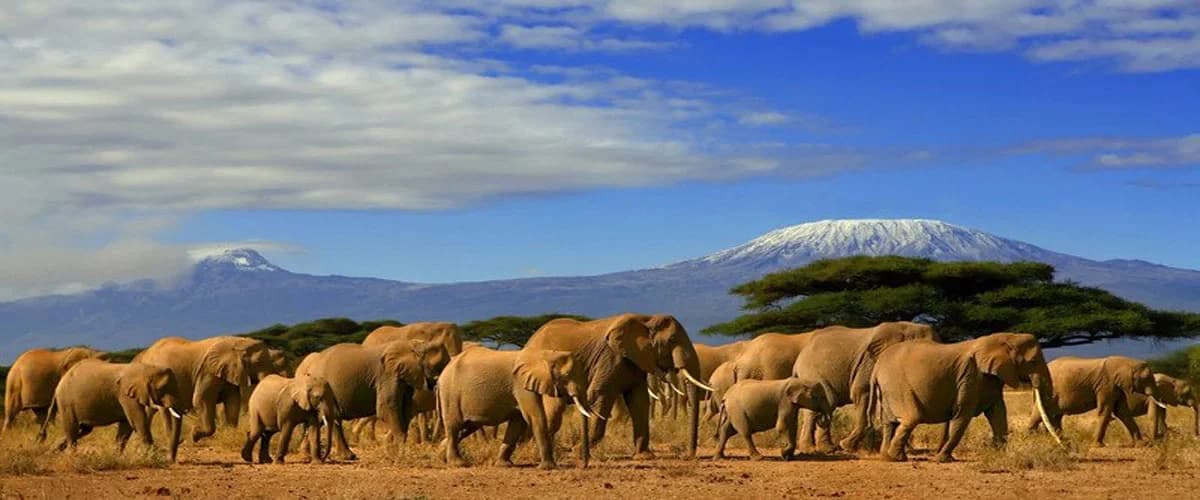
Photograph the whole group and leave room in the frame for its direction of travel. Follow the guide’s positioning and allow animals access to water, shade and each other.
Choose a route that gives you time in suitable habitat and keep the day worthwhile even without a sighting. Activity patterns describe tendencies, not an appointment. Stay within the area and hours permitted by the park, follow the guide and never feed, call or provoke an animal for a response.
Photography and wildlife etiquette →Does the same conservation category apply to every African elephant?
No. African savanna and African forest elephants are assessed separately. This profile concerns Loxodonta africana and does not transfer its category to the forest elephant.
Are sightings guaranteed?
No. A park listing or conservation record establishes context, not the location of an animal during your visit. Weather, habitat, animal movement and access affect what can be observed. We do not promise a sighting, hunt, birth or other behaviour.
What to keep in mind
- Do not use the older single African-elephant Vulnerable label.
- Continental status does not describe the trend or number in a particular park; no current park population counts are supplied.
- AWF is used for social behavior only: its introductory savanna/forest subspecies wording is outdated and does not override IUCN’s species distinction.
Sources reviewed . Conservation assessments retain their original dates; a review date does not mean the species was reassessed that day. Next editorial review due: May 2027, sooner if a cited assessment changes.
Where to look on our safari routes
These parks and landscapes have documented records of this animal. Use the links to compare habitats, overnight locations and routes. Local conditions and animal movement still determine what you see.
Maasai Mara
The Triangle checklist records elephant, buffalo, black rhino, common hippo, white-bearded wildebeest, common zebra and Masai giraffe.
Use the reserve checklist to understand the range of wildlife, rather than as a promise of sightings. Some names in older checklists differ from current species classifications.
Official or conservation source ↗Amboseli
Kenya’s submission lists bush elephant, Cape buffalo, Maasai giraffe, Grant’s zebra, wildebeest, lion, leopard, cheetah and spotted hyena.
This wildlife list comes from Kenya’s 2023 UNESCO Tentative List submission. Seasonal water, vegetation and animal movement affect what you will see; the listing does not predict sightings.
Official or conservation source ↗KWS identifies Amboseli’s elephant herds as a principal wildlife feature.
Plan time to observe elephants at a respectful distance. Even in a well-known elephant destination, close encounters are neither necessary nor guaranteed.
Official or conservation source ↗Aberdare
KWS names elephant and buffalo in Aberdare’s forest habitat.
Dense vegetation and changing visibility affect observation. Avoid planning a forest visit around a fixed number of sightings.
Official or conservation source ↗Samburu
The reserve section names elephant, reticulated giraffe, lion, leopard and cheetah.
Samburu also has Grevy’s zebra, a different species from the plains zebra described in this guide. Ask your guide to explain the identification differences.
Official or conservation source ↗Ol Pejeta
Ol Pejeta lists these predators, elephants and hippos among its wildlife.
Use the conservancy’s current visitor information when planning activities. Older population counts cannot predict how many animals will be visible during your visit.
Official or conservation source ↗Tsavo East
KWS highlights dust-red elephants and maneless lions at Tsavo East.
Red dust can colour an elephant’s skin; it does not make it a different species. Male lions’ manes vary, so not every male here is maneless.
Official or conservation source ↗Serengeti
TANAPA lists lion, leopard, elephant and buffalo alongside migrating wildebeest and zebra.
Migration timing and herd locations vary with conditions. Choose overnight locations for your travel window and allow flexibility rather than expecting every animal in one area.
Official or conservation source ↗Tarangire
TANAPA describes elephants and dry-season aggregations of wildebeest, zebra and buffalo in Tarangire.
Wildlife distribution changes with seasonal water and vegetation. Plan for the actual conditions during your visit rather than a fixed animal count.
Official or conservation source ↗Lake Manyara
TANAPA names elephant, lion, buffalo, zebra, wildebeest, giraffe and hippo in Manyara’s habitats.
Tree climbing is a known lion behaviour here, but it is not a promised sighting. A rewarding visit can also focus on the park’s varied habitats and other wildlife.
Official or conservation source ↗Ngorongoro
NCAA’s crater description names elephants, Cape buffalo, hippos, black rhinos, lions and wildebeest.
These records describe the crater’s wildlife. Keep crater-floor viewing separate from plans for the wider conservation area and its seasonal herds.
Official or conservation source ↗
Journeys through relevant habitat
These routes visit destinations supported by the presence sources above. They are general safaris, not guaranteed species encounters.