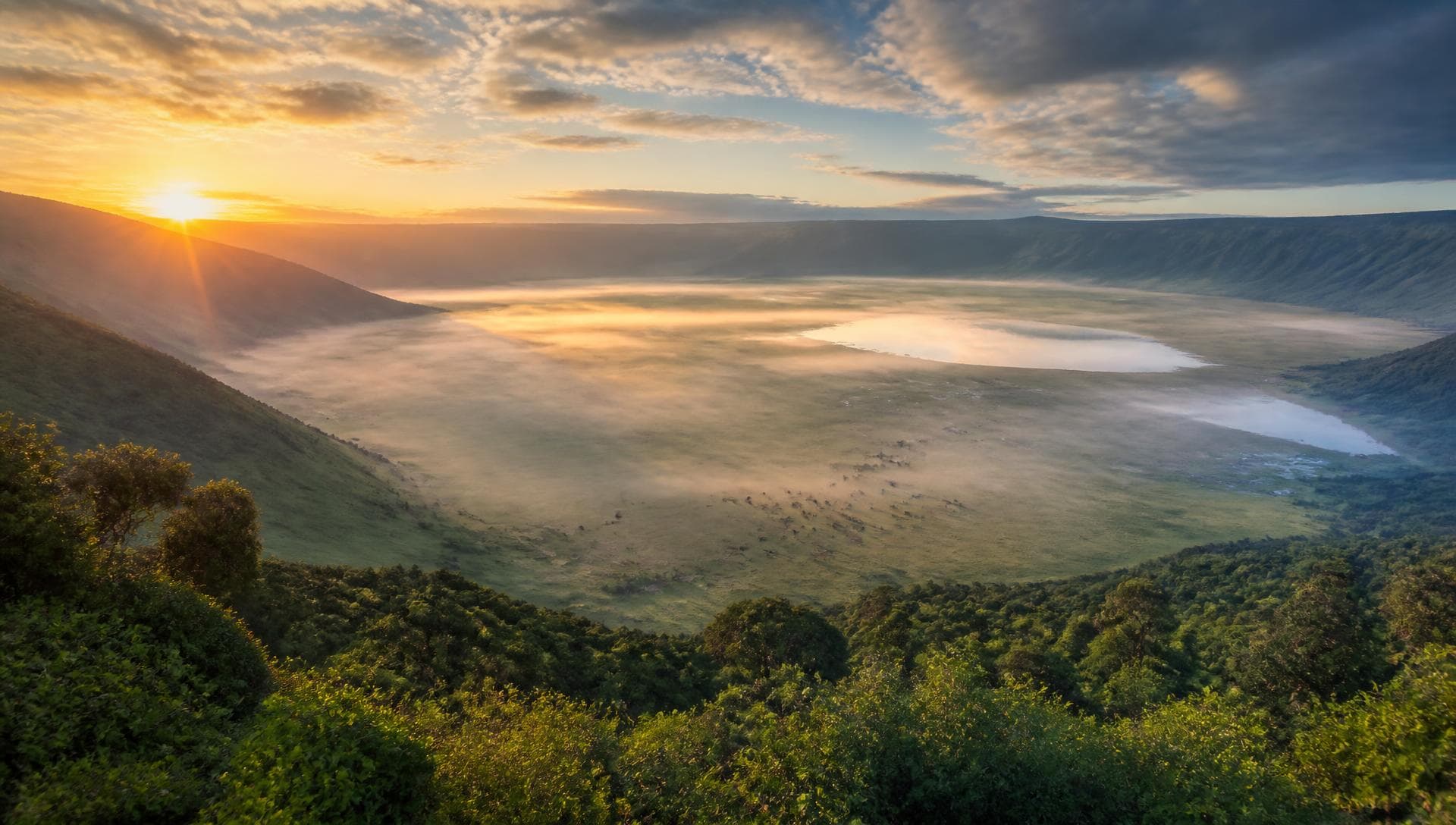
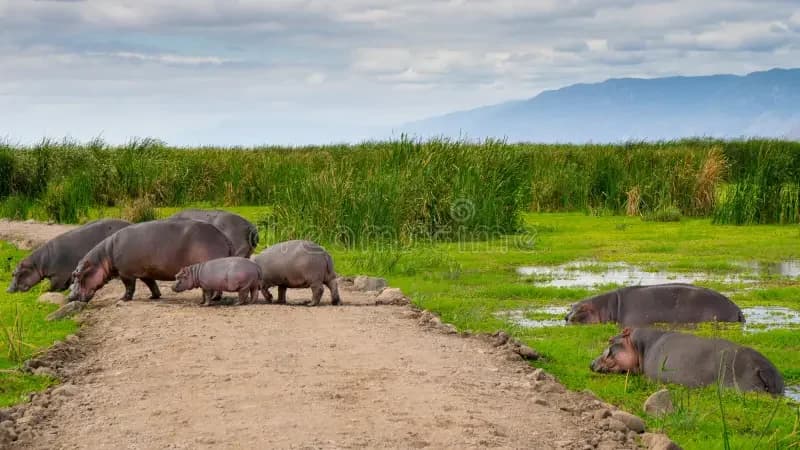
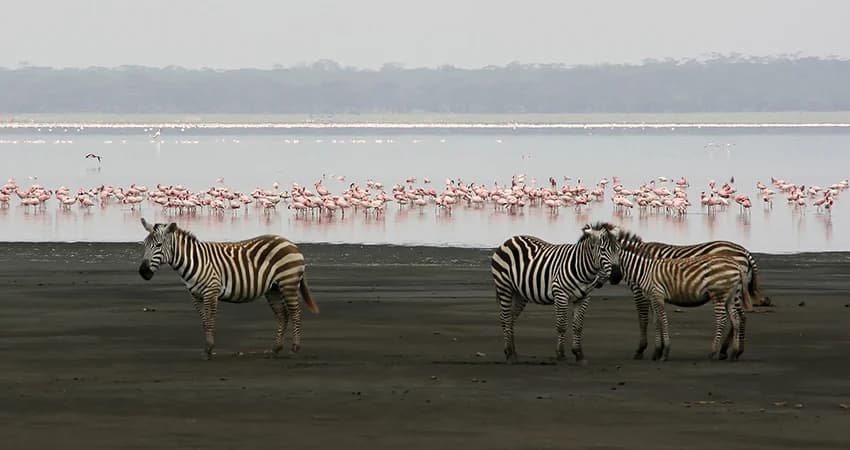
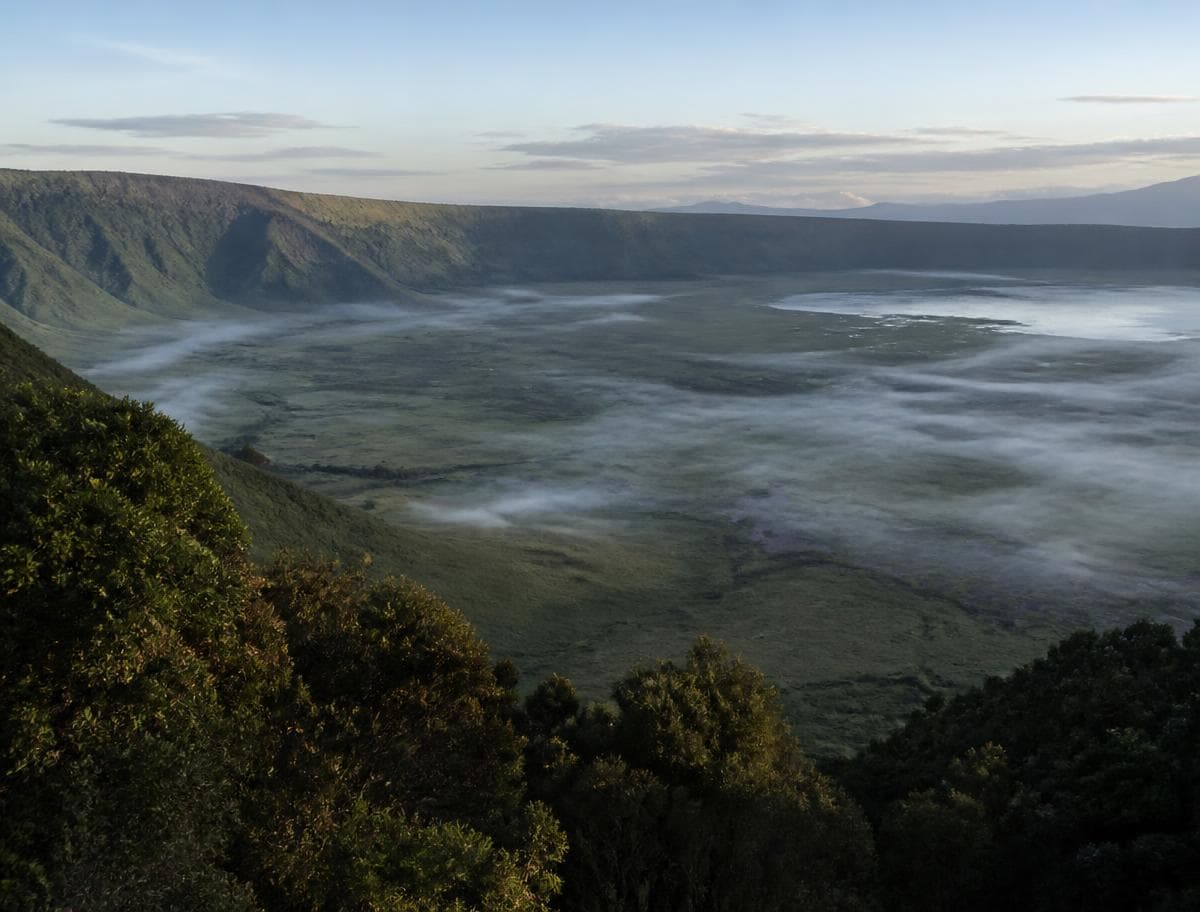
The Ngorongoro Conservation Area covers more than 8,000 square kilometres of highland, forest and plain, but the crater itself is what most travellers come for: an intact caldera roughly 19 kilometres across, with grassland, a soda lake, swamp and fever-tree forest on its floor.
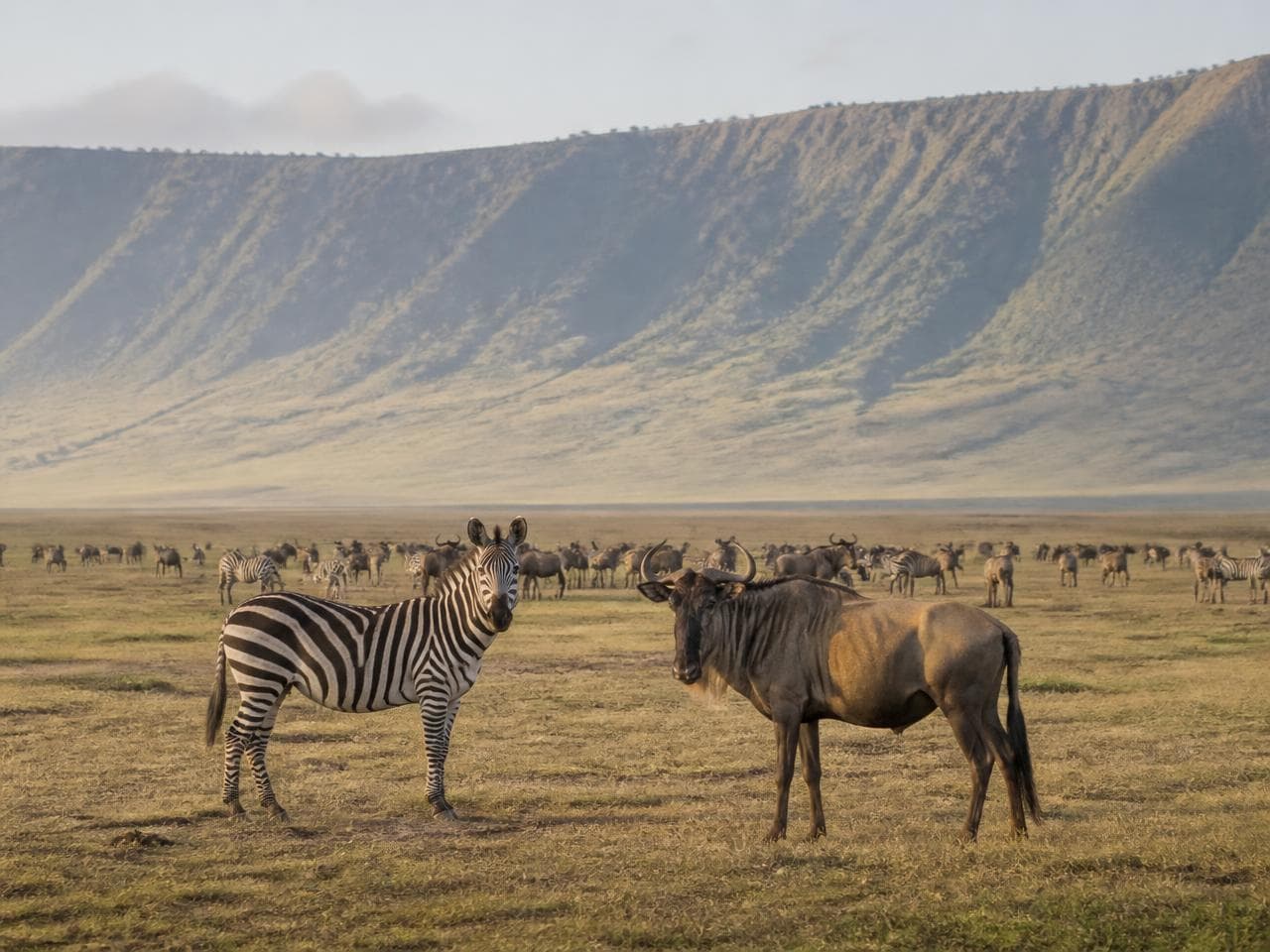
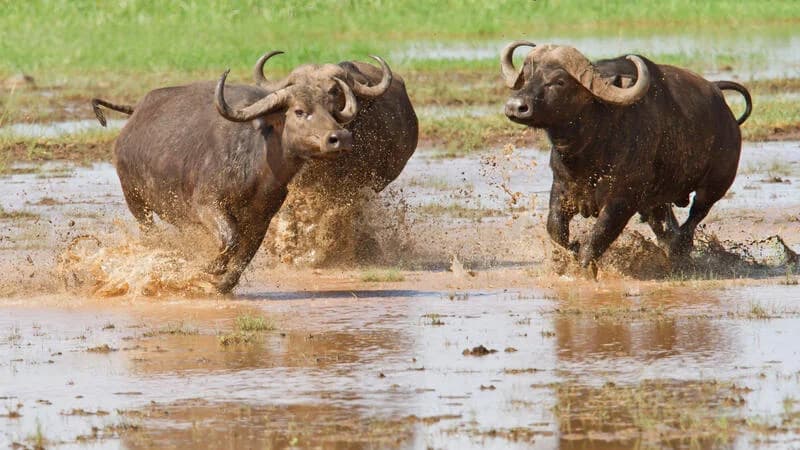
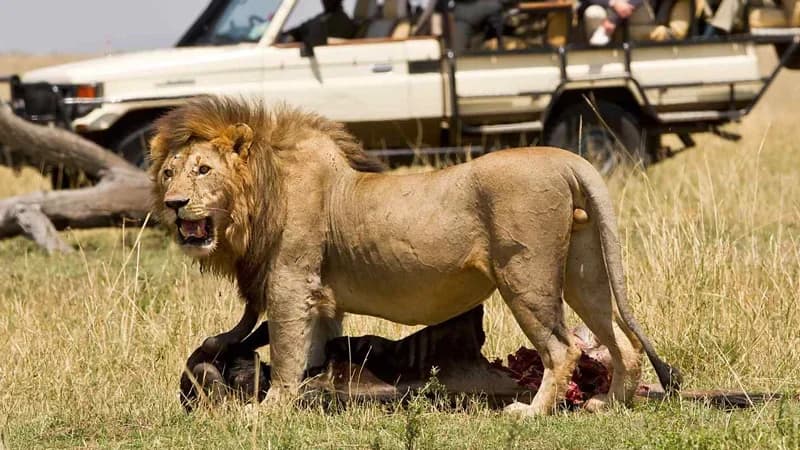
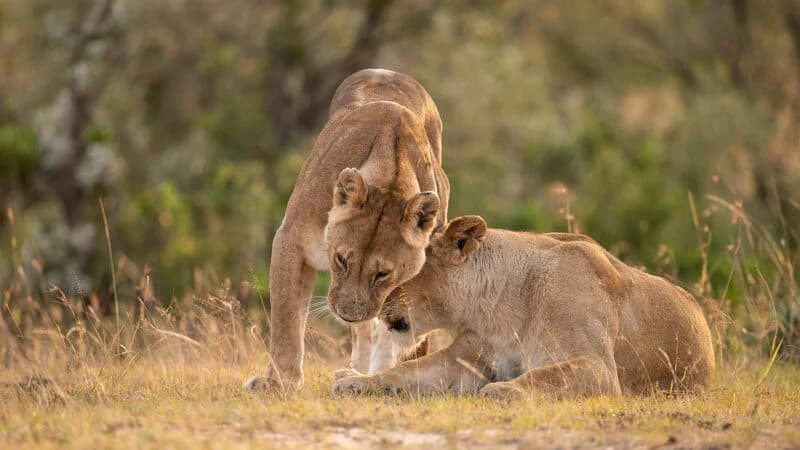
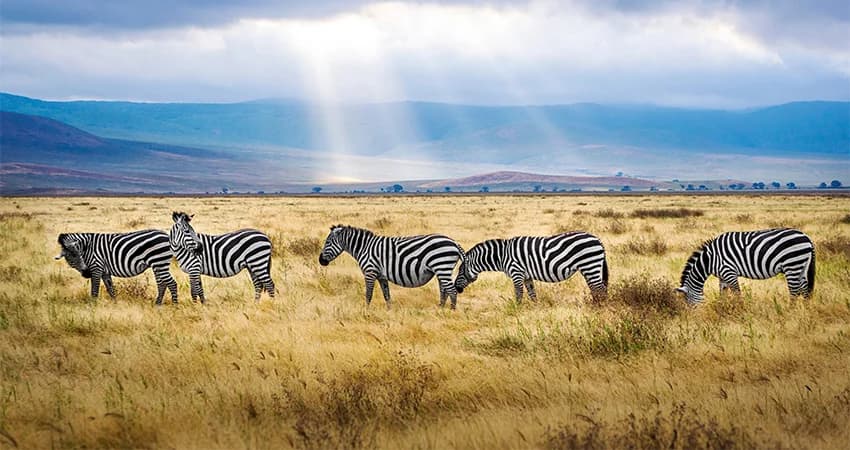
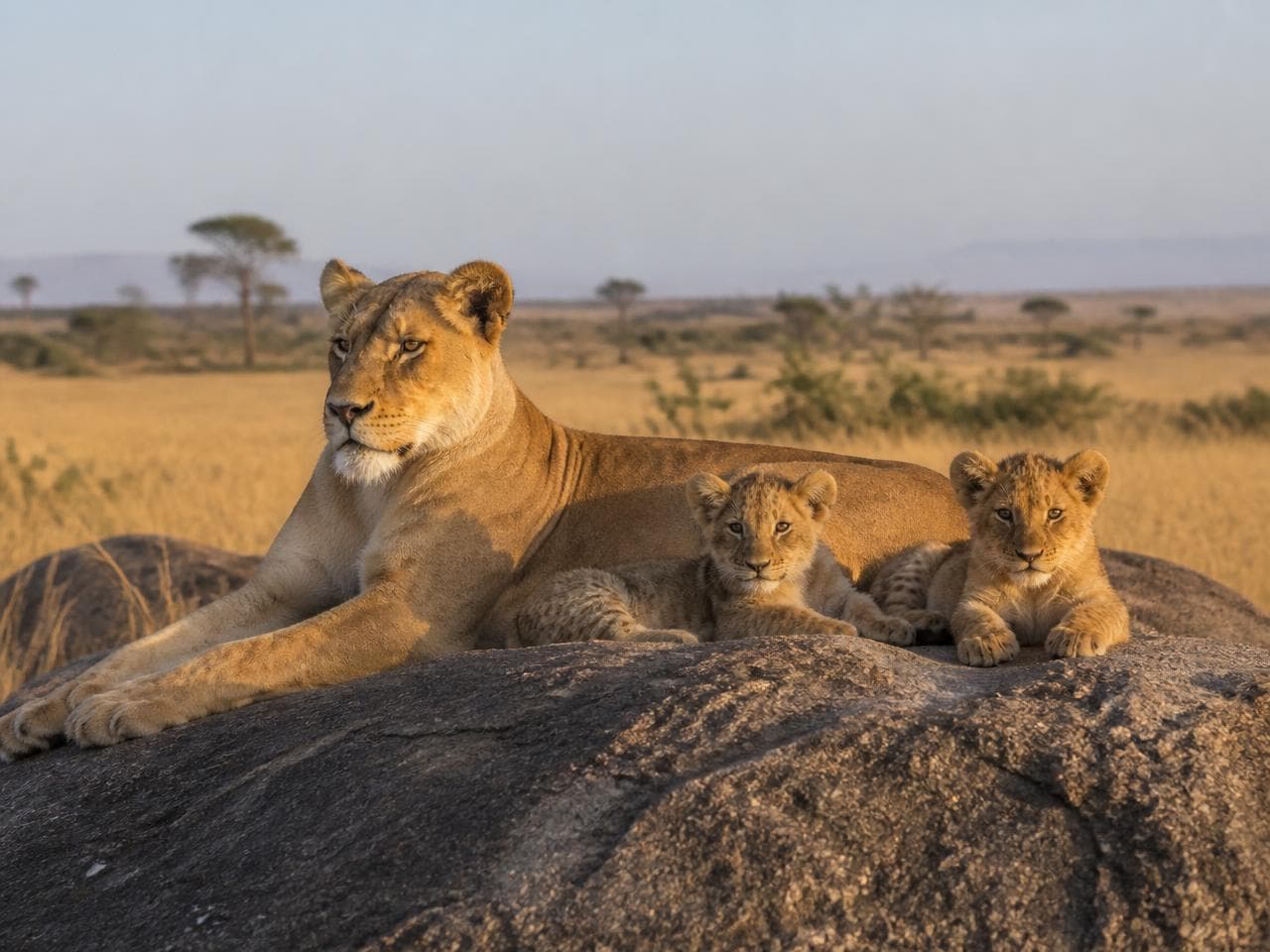
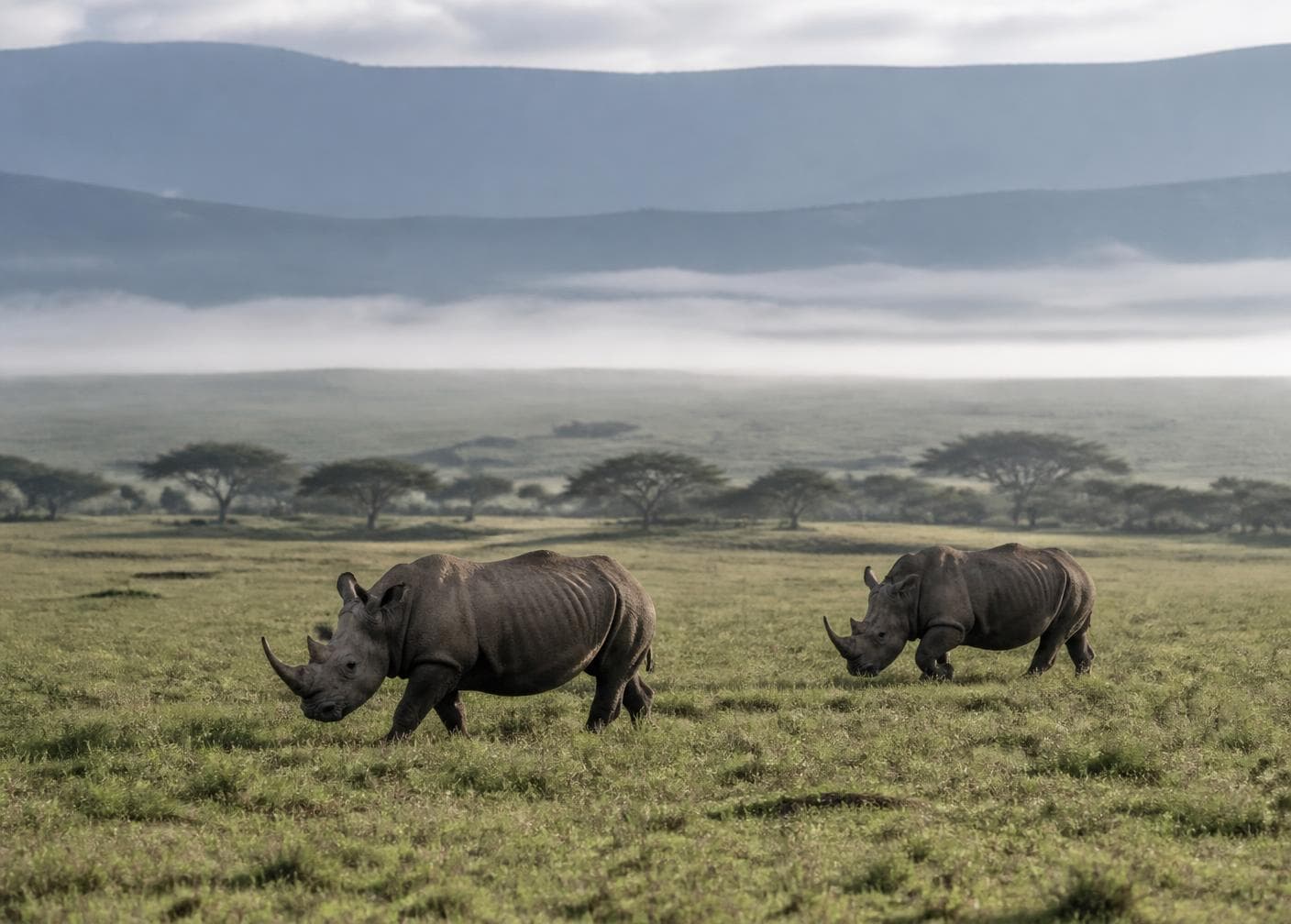
Because there is permanent water and grazing inside the walls, animals do not need to migrate out. Around 25,000 large mammals live on the floor — wildebeest, zebra, buffalo, eland, warthog, hyena and one of Tanzania's densest lion populations. It is also one of the more reliable places in East Africa to see black rhino, though sightings are usually distant.
Ngorongoro is not a national park but a conservation area, which means Maasai families continue to graze cattle on the highlands alongside the wildlife. You will pass herders on the crater rim road and in the Ndutu direction — a working landscape rather than a sealed reserve.
The crater is compact and popular, and the floor can only be driven between set hours, so vehicle numbers build through the morning. Descending at opening time, or staying on the rim rather than driving up from Karatu, makes a substantial difference to the experience.