
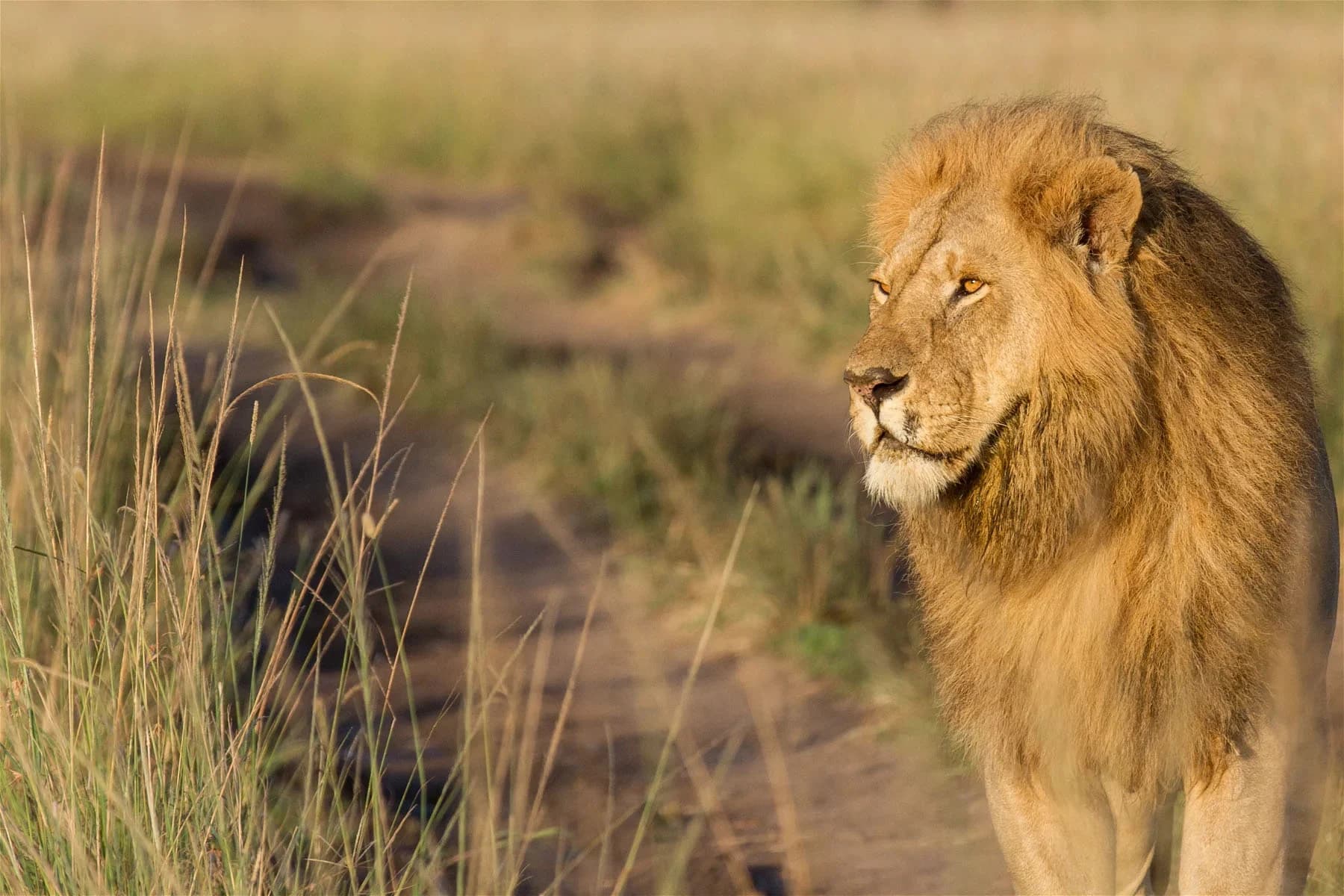
Identification and taxonomy
Diet, social life and activity
- Both male and female lions hunt; their prey includes hoofed herbivores. Source ↗
- Related adult females form the stable core of a pride, alongside dependent young; males may form related or unrelated coalitions. Source ↗
- Lionesses may raise cubs communally; pride size and composition vary with local conditions. Source ↗
- Lions are mainly active at night and around dawn and dusk, and spend substantial time resting. Source ↗
- Typical prey includes wildebeest, zebra and buffalo; lions also scavenge and take kills from other predators. Source ↗
- Lions can breed throughout the year; local cub survival depends partly on food supply and pride dynamics. Source ↗
Conservation and evidence
Photographing and watching responsibly
A resting pride can make a useful study of relationships and habitat. Frame several animals together without crowding their shade or the route between adults and cubs.
Choose a route that gives you time in suitable habitat and keep the day worthwhile even without a sighting. Activity patterns describe tendencies, not an appointment. Stay within the area and hours permitted by the park, follow the guide and never feed, call or provoke an animal for a response.
Photography and wildlife etiquette →Do only lionesses hunt?
No. Both males and females hunt. A familiar image of resting males should not become a rule about what every lion does.
Are sightings guaranteed?
No. A park listing or conservation record establishes context, not the location of an animal during your visit. Weather, habitat, animal movement and access affect what can be observed. We do not promise a sighting, hunt, birth or other behaviour.
What to keep in mind
- Do not apply the status of a West African or Asian subpopulation to every East African lion.
- A species' presence in a destination is not a guarantee of a sighting, hunt or cub encounter.
Sources reviewed . Conservation assessments retain their original dates; a review date does not mean the species was reassessed that day. Next editorial review due: May 2027, sooner if a cited assessment changes.
Where to look on our safari routes
These parks and landscapes have documented records of this animal. Use the links to compare habitats, overnight locations and routes. Local conditions and animal movement still determine what you see.
Maasai Mara
Mara Conservancy describes lion, leopard and cheetah in the Maasai Mara.
Allow several drives in varied habitat. A reserve species list cannot predict which cats your guide will find on a particular day.
Official or conservation source ↗Amboseli
Kenya’s submission lists bush elephant, Cape buffalo, Maasai giraffe, Grant’s zebra, wildebeest, lion, leopard, cheetah and spotted hyena.
This wildlife list comes from Kenya’s 2023 UNESCO Tentative List submission. Seasonal water, vegetation and animal movement affect what you will see; the listing does not predict sightings.
Official or conservation source ↗Samburu
The reserve section names elephant, reticulated giraffe, lion, leopard and cheetah.
Samburu also has Grevy’s zebra, a different species from the plains zebra described in this guide. Ask your guide to explain the identification differences.
Official or conservation source ↗Ol Pejeta
Ol Pejeta lists these predators, elephants and hippos among its wildlife.
Use the conservancy’s current visitor information when planning activities. Older population counts cannot predict how many animals will be visible during your visit.
Official or conservation source ↗Tsavo East
KWS highlights dust-red elephants and maneless lions at Tsavo East.
Red dust can colour an elephant’s skin; it does not make it a different species. Male lions’ manes vary, so not every male here is maneless.
Official or conservation source ↗Serengeti
TANAPA lists lion, leopard, elephant and buffalo alongside migrating wildebeest and zebra.
Migration timing and herd locations vary with conditions. Choose overnight locations for your travel window and allow flexibility rather than expecting every animal in one area.
Official or conservation source ↗Lake Manyara
TANAPA names elephant, lion, buffalo, zebra, wildebeest, giraffe and hippo in Manyara’s habitats.
Tree climbing is a known lion behaviour here, but it is not a promised sighting. A rewarding visit can also focus on the park’s varied habitats and other wildlife.
Official or conservation source ↗Ngorongoro
NCAA’s crater description names elephants, Cape buffalo, hippos, black rhinos, lions and wildebeest.
These records describe the crater’s wildlife. Keep crater-floor viewing separate from plans for the wider conservation area and its seasonal herds.
Official or conservation source ↗UNESCO’s property description records black rhino and lion, and wildebeest/zebra migration into the northern plains.
The northern plains are part of the wider conservation area. Seasonal migration there should not be confused with a crater-floor drive.
Official or conservation source ↗
Journeys through relevant habitat
These routes visit destinations supported by the presence sources above. They are general safaris, not guaranteed species encounters.