
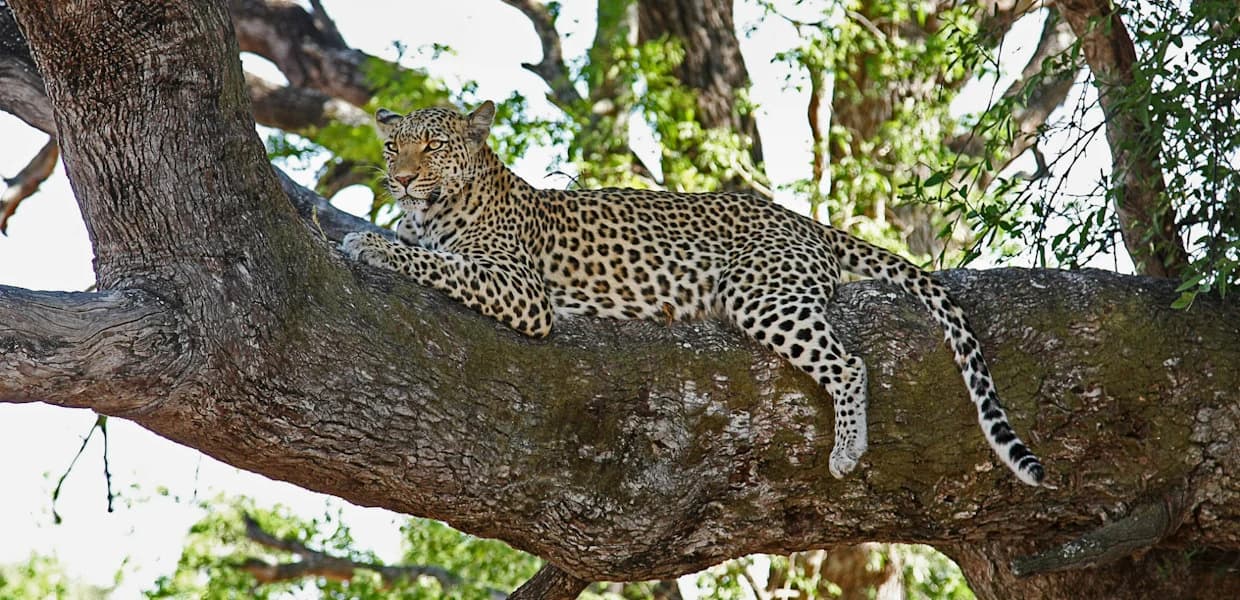
Identification and taxonomy
- Leopards have muscular, relatively short legs, broad paws and a long tail that assists climbing; individual coat patterns differ. Source ↗
Diet, social life and activity
- Leopards are generally solitary and territorial; females may be accompanied by cubs. Source ↗
- Leopards can carry prey into trees where larger competitors occur; they also hunt from the ground using cover and ambush. Source ↗
- African leopards use varied habitats, including woodland and grassland savanna, rather than being confined to one park landscape. Source ↗
- Savanna and woodland studies report mainly nighttime activity, but activity varies among habitats and populations. Source ↗
- Leopards often take medium-sized hoofed mammals, while also eating smaller mammals and birds according to local prey availability. Source ↗
- Scent marks and calls communicate territorial information; tree scratching is also used in some areas. Source ↗
- Females rear cubs without a permanent male partner; young may remain with their mother until dispersal. Source ↗
Conservation and evidence
- The IUCN Cat Specialist Group identifies Panthera pardus as Vulnerable. Source ↗
Photographing and watching responsibly
Look for an unobstructed composition from the permitted road, whether the cat is on the ground or in a tree. Do not ask the driver to crowd a resting animal or manoeuvre off-road for a cleaner background.
Choose a route that gives you time in suitable habitat and keep the day worthwhile even without a sighting. Activity patterns describe tendencies, not an appointment. Stay within the area and hours permitted by the park, follow the guide and never feed, call or provoke an animal for a response.
Photography and wildlife etiquette →Will a leopard always be in a tree?
No. A tree is one possible setting, not a guaranteed place to find a leopard. Its activity and position depend on the animal and conditions.
Are sightings guaranteed?
No. A park listing or conservation record establishes context, not the location of an animal during your visit. Weather, habitat, animal movement and access affect what can be observed. We do not promise a sighting, hunt, birth or other behaviour.
What to keep in mind
- East African material concerns the African population, commonly P. p. pardus; do not substitute Amur or Arabian leopard threat categories.
- Do not label every leopard nocturnal or promise a tree-resting sighting.
Sources reviewed . Conservation assessments retain their original dates; a review date does not mean the species was reassessed that day. Next editorial review due: May 2027, sooner if a cited assessment changes.
Where to look on our safari routes
These parks and landscapes have documented records of this animal. Use the links to compare habitats, overnight locations and routes. Local conditions and animal movement still determine what you see.
Maasai Mara
Mara Conservancy describes lion, leopard and cheetah in the Maasai Mara.
Allow several drives in varied habitat. A reserve species list cannot predict which cats your guide will find on a particular day.
Official or conservation source ↗Amboseli
Kenya’s submission lists bush elephant, Cape buffalo, Maasai giraffe, Grant’s zebra, wildebeest, lion, leopard, cheetah and spotted hyena.
This wildlife list comes from Kenya’s 2023 UNESCO Tentative List submission. Seasonal water, vegetation and animal movement affect what you will see; the listing does not predict sightings.
Official or conservation source ↗Samburu
The reserve section names elephant, reticulated giraffe, lion, leopard and cheetah.
Samburu also has Grevy’s zebra, a different species from the plains zebra described in this guide. Ask your guide to explain the identification differences.
Official or conservation source ↗Ol Pejeta
Ol Pejeta lists these predators, elephants and hippos among its wildlife.
Use the conservancy’s current visitor information when planning activities. Older population counts cannot predict how many animals will be visible during your visit.
Official or conservation source ↗Serengeti
TANAPA lists lion, leopard, elephant and buffalo alongside migrating wildebeest and zebra.
Migration timing and herd locations vary with conditions. Choose overnight locations for your travel window and allow flexibility rather than expecting every animal in one area.
Official or conservation source ↗
Journeys through relevant habitat
These routes visit destinations supported by the presence sources above. They are general safaris, not guaranteed species encounters.