
Identification and taxonomy
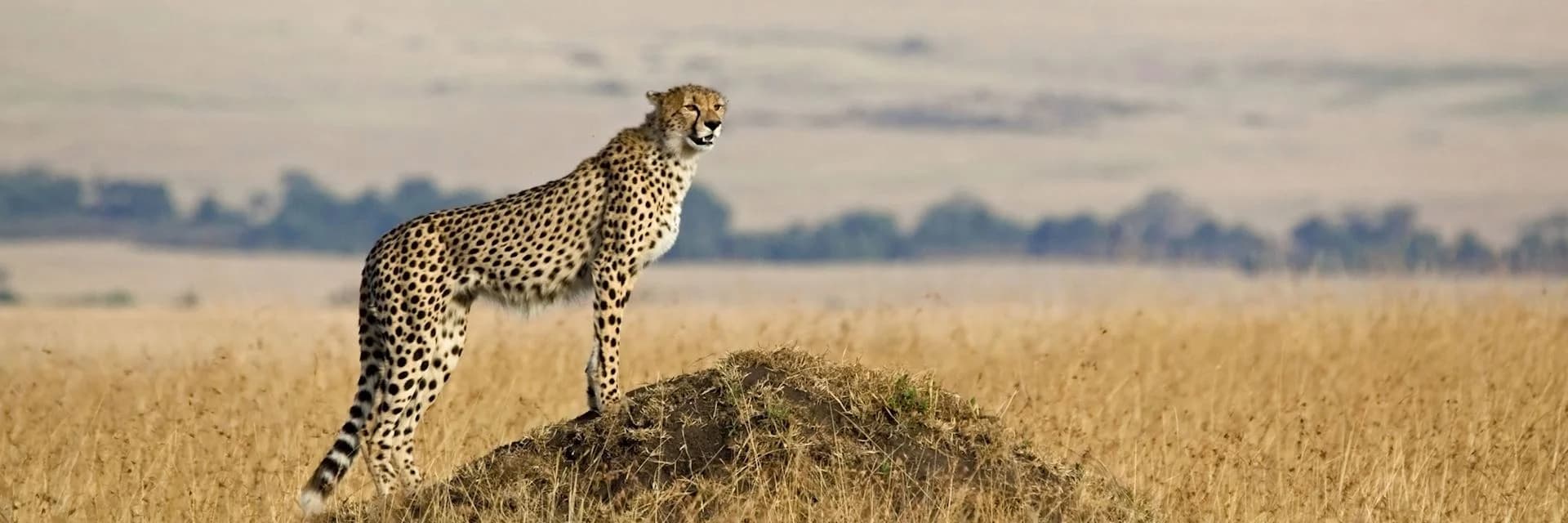
- Solid black spots and dark lines running from the eyes toward the mouth distinguish cheetah appearance from a leopard's rosettes. Source ↗
Diet, social life and activity
- Adult females usually live alone or with dependent young; males may live alone or in coalitions, often with brothers. Source ↗
- Cheetahs are mainly active by day, although nighttime activity occurs and can increase with moonlight. Source ↗
- Thomson’s gazelles on East African plains and impalas in woodland are important prey; prey selection varies locally. Source ↗
Conservation and evidence
More field context
- The account warns that excessive tourism and poor viewing practices can disrupt hunting, reproduction and mother–cub contact. Source ↗
- A hunt typically combines stalking with a short pursuit; cheetahs may lose kills to larger carnivores. Source ↗
- Semi-retractable claws provide grip, while the long tail assists balance during fast turns. Source ↗
Photographing and watching responsibly
Give a hunting or travelling cat room to choose its path. A wider picture of the animal in open habitat can be more useful than pushing close enough to interrupt what it is doing.
Choose a route that gives you time in suitable habitat and keep the day worthwhile even without a sighting. Activity patterns describe tendencies, not an appointment. Stay within the area and hours permitted by the park, follow the guide and never feed, call or provoke an animal for a response.
Photography and wildlife etiquette →Is a cheetah a smaller leopard?
No. They are different species. Compare body shape, spots and the facial markings described below rather than relying on size alone.
Are sightings guaranteed?
No. A park listing or conservation record establishes context, not the location of an animal during your visit. Weather, habitat, animal movement and access affect what can be observed. We do not promise a sighting, hunt, birth or other behaviour.
What to keep in mind
- Do not market vehicle crowding or approaching a family as a way to guarantee an encounter.
- A local destination presence needs its own park evidence; avoid sitewide density or speed trivia unsupported by a relevant source.
Sources reviewed . Conservation assessments retain their original dates; a review date does not mean the species was reassessed that day. Next editorial review due: May 2027, sooner if a cited assessment changes.
Where to look on our safari routes
These parks and landscapes have documented records of this animal. Use the links to compare habitats, overnight locations and routes. Local conditions and animal movement still determine what you see.
Maasai Mara
Mara Conservancy describes lion, leopard and cheetah in the Maasai Mara.
Allow several drives in varied habitat. A reserve species list cannot predict which cats your guide will find on a particular day.
Official or conservation source ↗Amboseli
Kenya’s submission lists bush elephant, Cape buffalo, Maasai giraffe, Grant’s zebra, wildebeest, lion, leopard, cheetah and spotted hyena.
This wildlife list comes from Kenya’s 2023 UNESCO Tentative List submission. Seasonal water, vegetation and animal movement affect what you will see; the listing does not predict sightings.
Official or conservation source ↗Samburu
The reserve section names elephant, reticulated giraffe, lion, leopard and cheetah.
Samburu also has Grevy’s zebra, a different species from the plains zebra described in this guide. Ask your guide to explain the identification differences.
Official or conservation source ↗Ol Pejeta
Ol Pejeta lists these predators, elephants and hippos among its wildlife.
Use the conservancy’s current visitor information when planning activities. Older population counts cannot predict how many animals will be visible during your visit.
Official or conservation source ↗Serengeti
The Cat Specialist Group discusses research on Serengeti cheetahs.
Research confirms cheetahs in the ecosystem, but study observations are not a forecast for your visit. Give the guide time to search suitable open habitat.
Official or conservation source ↗
Journeys through relevant habitat
These routes visit destinations supported by the presence sources above. They are general safaris, not guaranteed species encounters.